
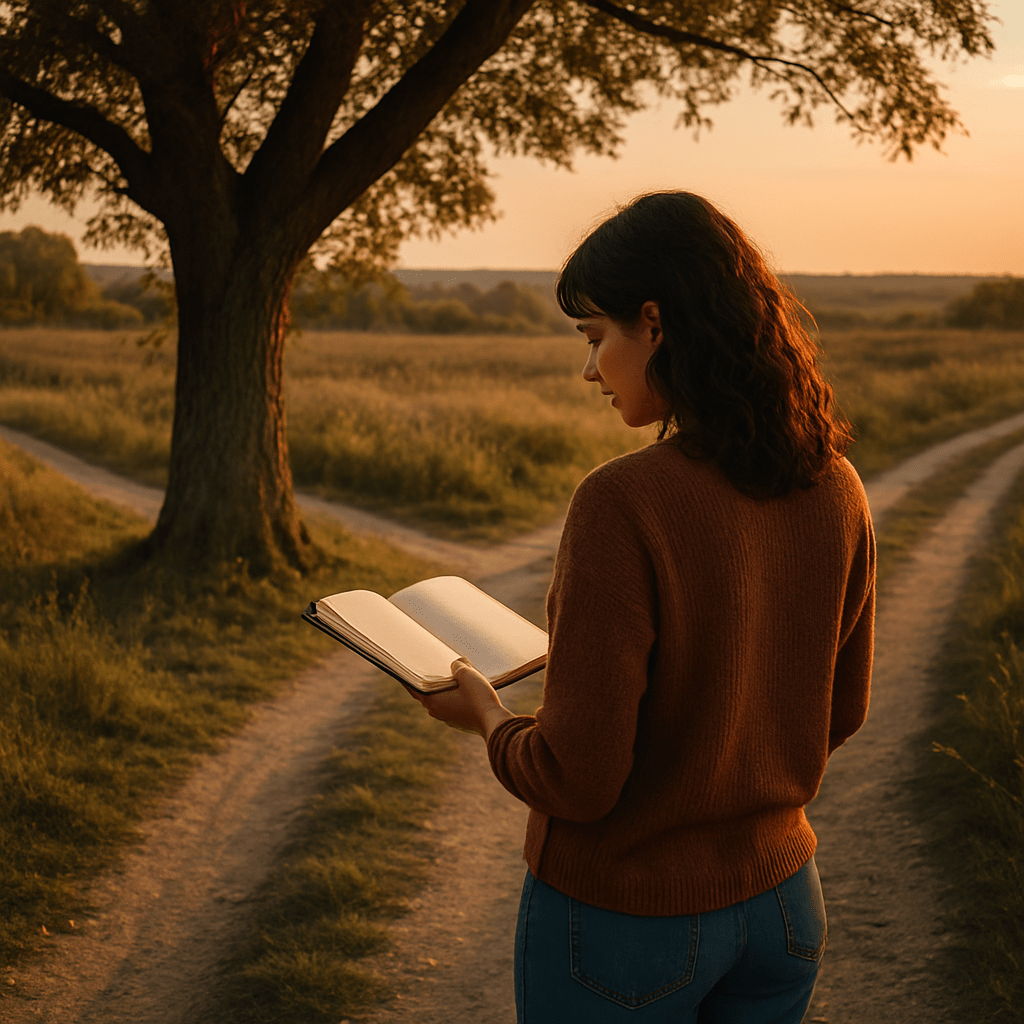
There’s something quietly powerful about the choices we make—especially the small, everyday ones that often go unnoticed. The ones we make in passing, with a shrug or a sigh, without much thought. Saying yes when we mean no, letting things slide because we’re too tired to confront them, deciding to shrink ourselves because it feels safer than taking up space. These choices rarely feel defining in the moment, yet over time, they begin to stitch themselves into the fabric of our lives, shaping how our story unfolds without us even realising it.
And then one day, in a moment of pause or unexpected reflection, we look up and find ourselves somewhere that doesn’t quite resemble the version of life we once imagined. It’s not necessarily a crisis—just a quiet discomfort, like wearing clothes that don’t quite fit anymore. We begin to notice how far we’ve drifted from the dreams we held or the values we once clung to, and with that realisation comes a gentle ache, a tug from deep within reminding us that, in big and small ways, we’ve been participants in the unfolding of our current reality.
It’s not easy to sit with that kind of truth. There’s a subtle pain in recognising that some of the detours in our lives weren’t caused by circumstances alone, but by our own hands—decisions made out of fear, uncertainty, pressure, or even sheer survival. The reality is, we don’t always choose from a place of strength or peace; sometimes we choose from a place of exhaustion, self-doubt, or a desperate need to keep going, to stay afloat. And while those choices may not have come from clarity, they were still choices nonetheless—and they left their mark.
That’s where real growth begins—not in self-blame or endless guilt, but in owning our part in the story with tenderness and understanding. It’s about looking back with soft eyes and saying, “That’s how I got here,” without making excuses, but also without tearing ourselves apart. Because acknowledging the role we’ve played doesn’t mean dismissing the ways life has been unfair, or pretending we haven’t faced things we never should have had to endure.
Some of us have walked through seasons that were crushing—moments where options were scarce, emotions were heavy, and all we had was instinct. We’ve made decisions in the dark, from places of heartbreak or confusion, and we’ve carried the consequences of those decisions with us, sometimes quietly, sometimes heavily. I know what it feels like to be cornered by life, to choose between what hurts and what hurts less, to carry a regret that lingers longer than you expected.
But maybe those regrets, those uncomfortable echoes of our past choices, aren’t here to punish us. Maybe they’re here to teach us something deeper—to slow us down, draw us inward, guide us toward understanding and healing. Maybe they’re an invitation to see ourselves more clearly, not with shame, but with compassion.
Think about Eve from the Bible. Her story has been told and retold for generations, usually with the focus on her mistake—the choice to eat the fruit, the decision that changed everything. And yet, what often gets overlooked is the context: the deception, the curiosity, and the humanity of it all. People remember the moment she reached, not the confusion that maybe came before it. Still, what gives me peace is knowing the story didn’t end there. God didn’t leave her in her guilt or shame. Instead, He stepped into the aftermath with a plan, with grace, with Jesus. That, to me, is the very heart of redemption—this idea that even our worst choices don’t have the final say. That grace meets us in the mess. That God doesn’t run from the places we’re most afraid of—He draws closer.
Sometimes, it’s the choices that hurt the most that wake us up. They help us see what we’ve been ignoring, what we’ve been too afraid to face. They show us where we’ve settled, where we’ve silenced ourselves, where we’ve let fear take the wheel. And even though that awakening can feel disorienting, it’s also where things start to shift because real change doesn’t come from pretending everything is okay—it comes from being honest enough to say, “This isn’t where I want to stay.” And there’s something incredibly freeing about that kind of self-truth. It gives us permission to begin again, to choose differently, to walk toward a version of ourselves we’ve always sensed was possible.
The hard thing about life is that when we don’t pause to reflect, the same patterns tend to repeat themselves. We move through different seasons, different relationships, different circumstances, but the same core lessons keep showing up. And unless we’re willing to look within, we miss what those moments are trying to teach us. It’s easier to blame, to distract, to numb. But the truth is, growth requires us to be present. To take responsibility not out of guilt, but out of hope that things can still be different.
And maybe that’s the point. Not to get everything right the first time. Not to pass every test. But to learn the lesson. To grow from it. To soften. To rise, not harder, but wiser.
Some choices will leave bruises. Some will stretch us in ways we didn’t ask for. But often, it’s those very moments that become the doorway into a better, more grounded version of ourselves. They bring us home—to who we are, to what we value, to the person we’re still becoming.
So if you’re sitting with choices that didn’t turn out how you hoped, know this: you’re not alone. You’re not broken. You’re just human. And being human means you get to choose again. It means you’re still learning, still unfolding, still worthy of growth and grace. Let your past be a classroom, not a prison. Let it shape you without defining you. Let it teach you how to move differently, how to choose with intention, how to live with more truth and tenderness.
And most of all, give yourself the grace to change—to keep evolving, one honest step at a time. Because you were never meant to have it all figured out. You were meant to grow, and growing has never been a straight, clean path. Let’s be the kind of people who stop running from our stories and start writing new chapters. The kind who stop shrinking to fit into the expectations of others and begin walking fully into who we’re becoming.
Let’s stop calling ourselves failures when resilient is a better word. Let’s stop being ashamed of the times we fell and start being proud of the way we got back up. Because in the end, our story won’t just be about what happened to us—but about how we responded. How we changed. How we learned. How we chose.
And if I get to write the story of my life, I hope it reads like a journey of bold, imperfect, beautiful growth—soft in some places, stretched in others, but always honest, always evolving, always rooted in the quiet, everyday power of choice.
 GrowingUp Chronicles
Leave a comment